Custom MSD Assay Development And Optimization
- Antibody pair, plate coating, blocking and detection built for your analyte, not a catalog kit.
- In-house ruthenylation and biotinylation, so a vendor lot change cannot stall your program.
Regulated And Inspected By:




S-PLEX for single-digit pg/mL sensitivity, U-PLEX for custom multiplexes, and bridging formats for ADA, validated fit-for-purpose through GLP.
From tiered ADA to S-PLEX, each tile is electrochemiluminescence work we run, with the published case study and neighboring pages linked.
Free, total and bound quantitation in serum across preclinical species and human
Screening, confirmatory and titer tiers on one platform, with drug tolerance established
Ligand binding NAb where a cell-based format is not required by the program
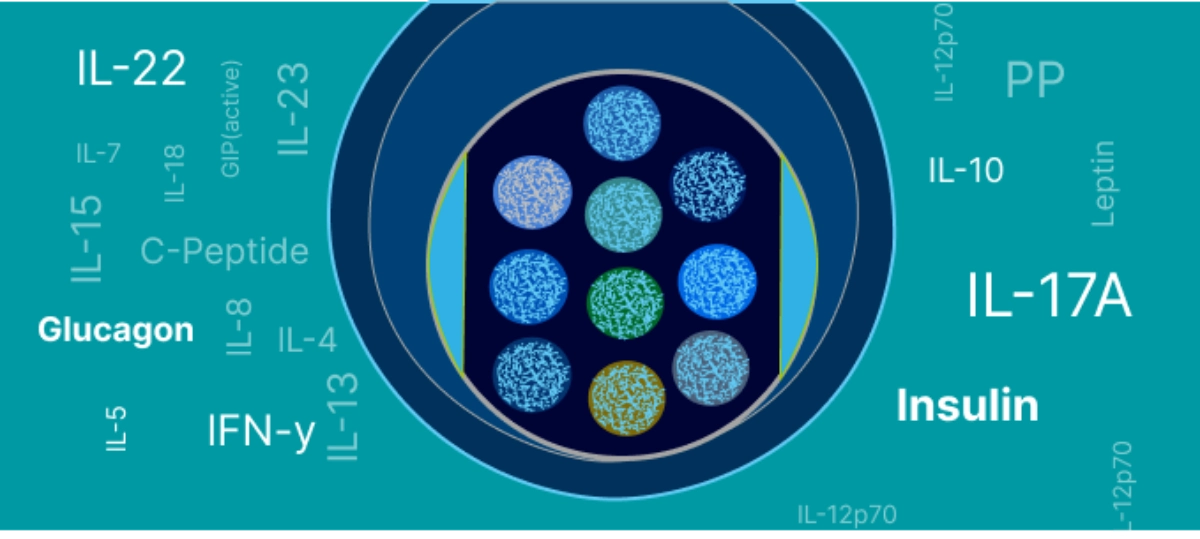
Multiplexed cytokine readouts for cytokine release syndrome monitoring and safety
Read moreHybridization ELISA on the MSD platform for oligonucleotide PK, developed and validated
Read morePharmacodynamic biomarkers multiplexed alongside PK from the same clinical sample
Femtogram per mL reach for analytes sitting at or below a standard MSD low end
Free, total and bound resolved as separate methods where the program needs each number
Moving to a new platform goes wrong when the method restarts from zero. We carry your reagents and knowledge forward, so development starts ahead.
20+Years Of Immunoassay Development For Biotech, Since 2003
500+Custom Methods, Including Every MSD Plate Format Here
Any scope change goes through a pre-approved SOW addendum, so your cost cannot move without an SOW addendum you have already approved. You get a transparent, itemized quote up front, scoped to your analyte panel, matrix and critical reagents rather than priced off a flat rate. MSD development typically runs two to four weeks, with validation in four to six, and your audited report with full validation detail follows about two weeks after that. Transfer of an established method is much faster. You can opt for rolling data and act on results before the report ever lands. Samples stay under cold-chain storage and documented chain of custody from the day they arrive.
Three things get you a quote: your analyte or panel, whether the critical reagents are yours or ours to procure, and the validation rigor you need, fit-for-purpose or GxP. If a catalog MSD kit works in your matrix we will say so rather than sell you development. If you already have an ELISA that works, converting that pair onto MSD is usually the fastest route to the sensitivity you need. If you have neither, we build from reagents up and tell you whether standard MSD or S-PLEX reaches your low end. Send your matrix, species, sample count and target sensitivity, and an itemized quote and timeline come back.
Quoted with permission, names withheld. Yours would be too.
The services are customized to our specific needs as opposed to standard packages.
We are thrilled to complete our bioanalytical studies with their top quality and incredibly responsive team.
We trust NorthEast BioLab to design and execute streamlined, impactful bioanalytical projects
NorthEast BioLab goes the extra mile. We look forward to more meaningful collaborations.
NorthEast BioLab offers a science-based, hands-on approach to the latest bioanalytical platforms
There was an issue with half-life extrapolation, and NorthEast BioLab brought in the right experts to find the solution.
We ruthenylate and biotinylate in-house for analytes no kit reaches, so custom reagents never wait on a vendor.
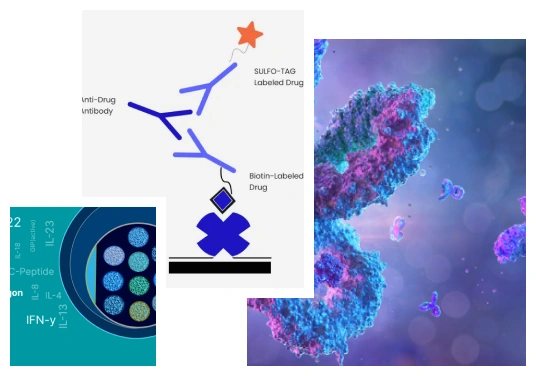
Meso Scale Discovery Electrochemiluminescence (ECL) Assays are an excellent singleplex and multiplex platform for assessing target analytes in complex biological samples. The platform offers ultra-low analyte detection….
Second comes the format call, with S-PLEX or V-PLEX chosen and priced up front rather than discovered mid-development.
We check whether an existing pair converts or a new one has to be built for you.
Itemized scope with the plate format, S-PLEX or V-PLEX, chosen and priced up front.
Antibody pair qualified, drug tolerance and interference resolved, plate conditions set.
Four to six weeks for a de novo method, fit-for-purpose or full GLP to ICH M10.
Complete batches under QC, with the calibration curve accepted before any sample reads.
QA-audited report with full validation detail, about two weeks after the last batch.
Because the move from ELISA to MSD to S-PLEX is planned at intake, and your program never waits on a new vendor qualification.
Regulated And Inspected By:






Every service linked below can step up to MSD when its current immunoassay reaches a limit.
What scientists ask before moving an assay to MSD, answered.
MSD sits between ELISA and hybrid LC-MS in our sensitivity escalation, and both neighbors run on our instruments.