DDA And DIA Discovery Proteomics, Label-Free
- Label-free quantitation in MaxQuant and DIA-NN across plasma, serum, urine and FFPE tissue.
- You get the differential protein list across all your groups, not one analyte at a time.
Regulated And Inspected By:


DDA and DIA discovery through MaxQuant and DIA-NN, SISCAPA where no reagent exists, and intact mass, DAR and glycoform work for biologics, one queue for all of it.
Every item matches a typical problem with the result we return, and follow-on work is linked where it has its own page.
Structural elucidation from accurate mass and MS2, which fills most of our Orbitrap time today
Read moreCollagen subtype identification running in the lab now, where an immunoassay cannot separate the forms
Read moreA protein measured without an antibody pair, by immunocapture and LC-MRM
Read moreTreated versus control, quantified label-free and delivered analysis-ready
Sequence coverage from multi-enzyme digests, with the PTM placed on a specific residue
Orthogonal intact mass, peptide map and glycan profile following a change, transfer or scale-up
Host cell protein quantitation for process development, impurity monitoring and submission support
Intact mass characterization of your mAb, fusion protein or ADC with the drug load profiled
Read moreDiscovery data fails on interpretation. We read the results with you and carry the hits that matter into SISCAPA quantitation.
20+Years Of Mass Spectrometry Bioanalysis, Since 2003
500+Custom Methods, Including High Resolution Mass Spec
Any scope change goes through a pre-approved SOW addendum, so your cost cannot move without an SOW addendum you have already approved. You get a transparent, itemized quote up front, scoped to your matrix, sample count and the depth of identification you need rather than priced off a flat rate. Targeted method development and validation runs four to six weeks, our large molecule figure. Discovery and untargeted work takes longer than that, because it is not dilute and shoot, and we will tell you how much longer before you commit. You can opt for rolling data and act on results before the interpreted report ever lands. Samples stay under cold-chain storage and documented chain of custody from the day they arrive.
Three things get you a quote: your matrix and sample count, whether you need identification or quantitation, and whether the result is exploratory or heading into a regulatory filing. If a triple quadrupole method would answer your question faster and cheaper, we will tell you so and point you at our LC-MS page instead. Where you need both, discovery to find the protein and targeted quantitation to measure it, that runs here on one instrument. Send your matrix, your sample count and your question, and you get an itemized quote and a timeline back, scoped against exactly what you sent us. If you are not sure which of the two you need, that is the better conversation first.
Quoted with permission, names withheld. Yours would be too.
We trust NorthEast BioLab to design and execute streamlined, impactful bioanalytical projects
NorthEast BioLab offers a science-based, hands-on approach to the latest bioanalytical platforms
We worked closely to implement the most efficient and cost-effective bioanalytical assay for our PK Studies.
NorthEast BioLab always exceeds expectations on bioanalytical assay development, validation, and sample analysis.
We have worked with NorthEast BioLab for over ten years given their commitment to highest quality bioanalytical data.
This study, same as all other bioanalytical studies, was completed with top quality and reporting standard with incredible responsiveness.
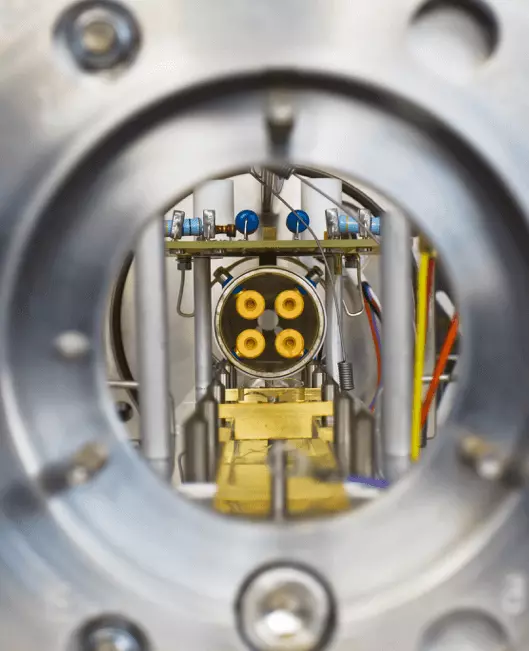
A Q Exactive HF runs in our own lab, so discovery work is never queued behind someone else's samples.
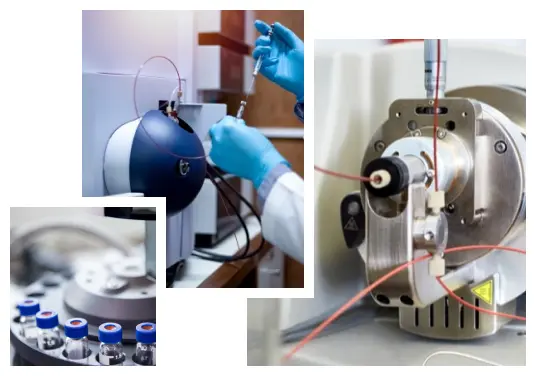
Mass spectrometry Assay is a widely used procedure observed as having outstanding sensitivity. Triple-quadrupole mass spectrometry (MS/MS) offers additional benefits due to its selectivity. In mass spectrometry analysis, it is essential to isolate….
The opening call on scope shapes every step after it, from sample prep to the final readout.
We establish whether your question needs identification, quantitation or both.
Itemized scope, sample prep and data processing settled before any work starts.
Digest, gradient and acquisition mode set, with your matrix and depth in mind.
Four to six weeks for a targeted method, longer where the work is untargeted.
Samples acquired in complete batches, with system suitability run before and after.
Interpreted report plus the raw files, so your team can reprocess independently.
Because the characterization package is built for the reviewer rather than the instrument log.
Regulated And Inspected By:






A second lab usually starts over to quantify a discovery hit. The services that carry your target forward are linked below.
What discovery and CMC teams ask before committing a target or a filing, answered.
A protein found by HRMS usually needs an assay next, which our immunoassay and SISCAPA teams build.