Services
Platforms
Solutions
About Us
 About Us
 Overview
 Leadership
 Facility & Equipment
 Quality & Compliance
 Therapeutic Areas
 Why Us?
 Values
 Process
 Partners
 Careers
Sr. Scientist – Cell Based Assay
Associate Scientist, Central Laboratory Services
Business Development Associate
Sr. Scientist, LC-MS/MS Bioanalysis – Hamden, CT, USA
Sr. Scientist, ELISA Immunoassay Bioanalysis – Hamden, CT, USA
GLP Quality Assurance Manager
Sr. Scientist - Pharmacokinetics (PK)
Content Manager, Scientific and Regulatory Writing
Resources
Pan B-Cell Surface Marker Bispecific Antibody: Domain-Specific ADA and Cell-Based Neutralizing Antibody Assay Development for Clinical Immunogenicity Assessment


Challenge
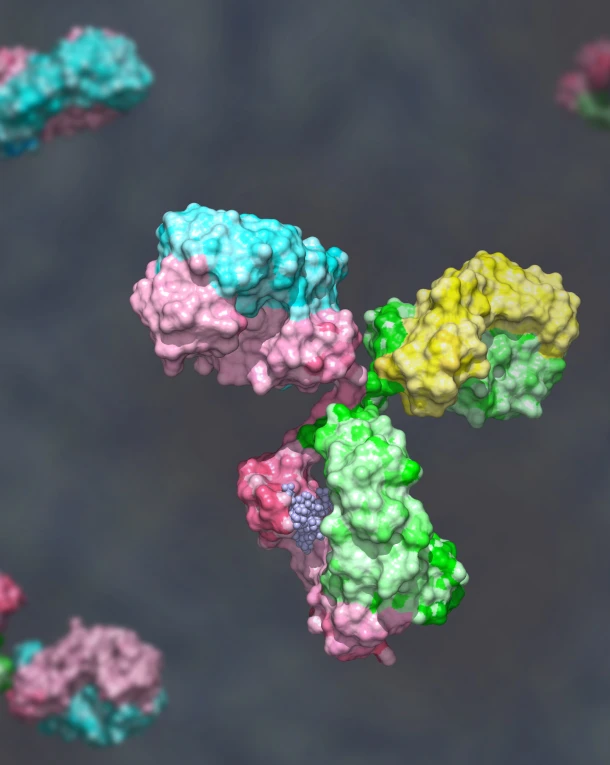
Pan B-cell bispecific antibody immunogenicity assessment presents one of the most complex bioanalytical challenges in clinical drug development. Bispecific antibodies targeting two distinct B-cell surface markers simultaneously carry two structurally independent binding arms, each of which can independently trigger an immune response in treated subjects. Standard immunogenicity testing platforms are designed for conventional monoclonal antibodies and are not built to differentiate ADA responses between two separate binding domains. For a sponsor developing a therapeutic targeting two pan B-cell surface markers, this gap demanded purpose-built immunogenicity assays capable of evaluating domain-level immune responses — an approach that required both novel reagent design and specialized cell-based assay engineering.
For the ADA assay, the central challenge was identifying reagents that retained binding activity at both arms of the bispecific simultaneously, a requirement that eliminates many commercially available antibody detection systems optimized for single-target molecules. The assay also needed to overcome interference from shed or soluble endogenous B-cell target antigens in serum, which could compete with the drug for detection reagent binding and generate false-negative results. Building an endogenous target tolerance ADA assay that remained sensitive to drug-mediated ADA masking at high circulating drug concentrations introduced an additional layer of complexity. These combined constraints defined the need for a domain-specific ADA assay bispecific antibody format capable of individually characterizing immune responses against either binding arm, a standard that is increasingly expected in bispecific antibody regulatory submissions.
For the neutralizing antibody assay cell-based platform, the sponsor required a functional readout capable of detecting domain-specific neutralization of either binding arm of the bispecific. A NAb assay bispecific antibody program of this nature requires not only cell engineering to reconstitute the relevant signaling pathway, but also careful management of matrix effects from clinical samples that can non-specifically suppress or amplify the cell-based signal and confound neutralization determinations. The domain-specific nature of the requirement meant that a single cell line could not address both arms — a separate, arm-specific cellular readout was needed for each target.
Solution
A systematic reagent screening campaign was conducted to establish the domain-specific ADA assay bispecific antibody format, identifying antibodies capable of binding to each arm of the bispecific independently and in combination without mutual steric obstruction. Candidate detection reagents were evaluated against a panel of domain-specific positive control antibodies and validated for sustained detection in the presence of soluble endogenous B-cell target antigens. Anti-drug antibody matrix interference arising from high-abundance serum proteins and endogenous target antigens was addressed through optimized sample dilution combined with calibrated inclusion of heterophilic blocking reagents. The resulting ECL bridging immunoassay ADA format implemented the standard screening, confirmatory, and titration tier architecture fully aligned with tiered ADA assay FDA guidance, with arm-level domain specificity preserved at every tier to enable individual characterization of immune responses to each binding domain.
For the cell-based NAb assay, Jurkat cell NAb assay development was performed by engineering a Jurkat cell line to express an NFAT luciferase reporter assay construct activated downstream of one of the B-cell surface marker targets. The complementary Raji cell B-cell assay component consisted of Raji cells stably engineered to express the relevant B-cell surface marker at levels sufficient to drive consistent bispecific-mediated immune synapse formation and reporter activation. When the bispecific antibody bridges the effector Jurkat and target Raji cells, NFAT-driven luciferase expression provides a quantitative functional readout proportional to the drug's engagement with its target. Neutralizing antibodies in patient samples inhibit this bridging activity and suppress the luciferase signal in a concentration-dependent manner, enabling precise NAb quantification.
Cell-based NAb assay matrix effects were addressed through controlled matrix dilution combined with heterophilic blocking agents in the assay diluent, preventing non-specific signal suppression without interfering with the bispecific-mediated bridging interaction. Domain specificity was achieved through targeted cell engineering design, with each binding arm's neutralization assessed independently using the relevant arm-specific target cell line. This approach allowed the sponsor to attribute neutralizing activity to specific immunogenic epitopes on the bispecific molecule and generate arm-resolved NAb data for regulatory submission.

Outcome
A domain-specific ADA assay and cell-based NAb assay were successfully developed and validated for this pan B-cell surface marker bispecific antibody clinical program. The tiered ECL bridging immunoassay demonstrated sensitivity and specificity for immune responses directed at each individual binding arm while maintaining endogenous target tolerance across the circulating drug levels characteristic of the clinical dosing regimen. The cell-based neutralizing antibody assay, built on the engineered NFAT- luciferase Jurkat and Raji cell platform, provided a functionally relevant, domain-specific measure of NAb activity meeting all performance requirements for signal window, sensitivity, and matrix tolerance across clinical sample cohorts.
Together, these assays give the sponsor a comprehensive view of the immunogenic profile of the bispecific molecule at the binding-domain level. Domain-specific characterization of ADA and NAb responses is increasingly recognized as a regulatory expectation for complex bispecific therapeutics, and the tiered assay architecture developed for this program is fully aligned with current FDA and EMA guidance on immunogenicity assessment for biological products.
Immunogenicity assay development validation for bispecific therapeutics is fundamentally more complex than for conventional monoclonal antibodies, requiring domain-aware assay design, specialized cell engineering, and matrix management strategies that must be purpose-built for each program. The expertise of a dedicated bioanalytical CRO bispecific antibody team is critical to navigating these challenges efficiently and generating immunogenicity data that meets the quality, specificity, and regulatory compliance standards required for clinical advancement. As bispecific antibody programs continue to advance through later-stage clinical development, robust domain-level immunogenicity data will be a core component of the benefit-risk profile submitted to regulatory agencies.
Registered And Inspected By Various Regulatory Agencies






Speak To Our Scientist About Your Multiplex Cytokine Assay, Cytokine Quantification On Meso Scale Discovery
Similar Case Study Articles
-

Humanized Monoclonal Antibody (MAb) PK ELISA Development, GLP Validation, And MAb Bioanalysis
-
Oligonucleotide Hybridization ELISA PK Assay, GLP Validation, Sample Analysis
-

TaqMan Gene Expression Assay, Copy Number Variation
-

Genomic Variation Analysis – TaqMan Single Nucleotide Polymorphism (SNP) Analysis
-

LC MS Bioanalysis Of Oligos Using Mass Spec And Ion Pair Chromatography
-
Dosing THC Lab, Cannabis Testing Lab, CBD Melatonin Testing
-

HPLC-UV Method Development: Testing 9 Articles in Formulation
-
Payload Plus Peptide LC MS Analysis, GLP Validation In Rat, NHP, Human Plasma
-

Epigallocatechin gallate (EGCG) LC MS Analysis In VcEDTA Human Serum
-

LC MS Method For Proline Amino Acid, Hydroxyproline In Mouse Tissues
-

LC MS Method For DNA Adducts Analysis In Cell-Based In-Vitro Samples
-

LC MS Method for Everolimus Eluting Coronary Stent Drug Delivery Systems
-

Mass Spectrometry Amino Acids, Quantitative LC MS Amino Acid Analysis
-

LC MS Method Development And GLP Validation For PK Plasma Sample Analysis
-

Incurred Sample Reanalysis (ISR) Test, FDA Requirements, And Study Evaluation
-
Dried Blood Spot (DBS) Sampling, DBS Collection, And DBS Analysis