






VP, Bioanalytical Development
Services
Platforms
Solutions
About Us
 About Us
 Overview
 Leadership
 Facility & Equipment
 Quality & Compliance
 Therapeutic Areas
 Why Us?
 Values
 Process
 Partners
 Careers
Sr. Scientist – Cell Based Assay
Associate Scientist, Central Laboratory Services
Business Development Associate
Sr. Scientist, LC-MS/MS Bioanalysis – Hamden, CT, USA
Sr. Scientist, ELISA Immunoassay Bioanalysis – Hamden, CT, USA
GLP Quality Assurance Manager
Sr. Scientist - Pharmacokinetics (PK)
Content Manager, Scientific and Regulatory Writing
Resources
Luteinizing hormone
- Luteinizing hormone/LH is a reproductive hormone secreted by anterior pituitary
- LH stimulates ovulation and corpus luteum formation in females
- LH promotes testosterone production by testes in males
- LH is a biomarker of reproductive disorders and can be assayed using ELISA, MSD or Luminex
Regulated And Inspected By:




Provide Your Bioanalysis Study Details
We Will Respond Within 1 Business Day
Click below for answers to your LH Biomarker Study questions -
What is LH?
An Introduction to Luteinizing Hormone (LH)
Luteinizing hormone (LH) is a hormone produced in the anterior pituitary gland involved in regulation of the reproductive function. Specifically, gonadotropic cells in the anterior pituitary gland produce LH or Luteinizing hormone LH SLH production is regulated by gonadotropin-releasing hormone (GnRH) from the hypothalamus. An acute surge in LH levels triggers ovulation and the development of the corpus luteum in females. In males, LH is also called interstitial cell-stimulating hormone (ICSH). They act on the Leydig cells to produce testosterone and work in synergy with the follicle-stimulating hormone (FSH).
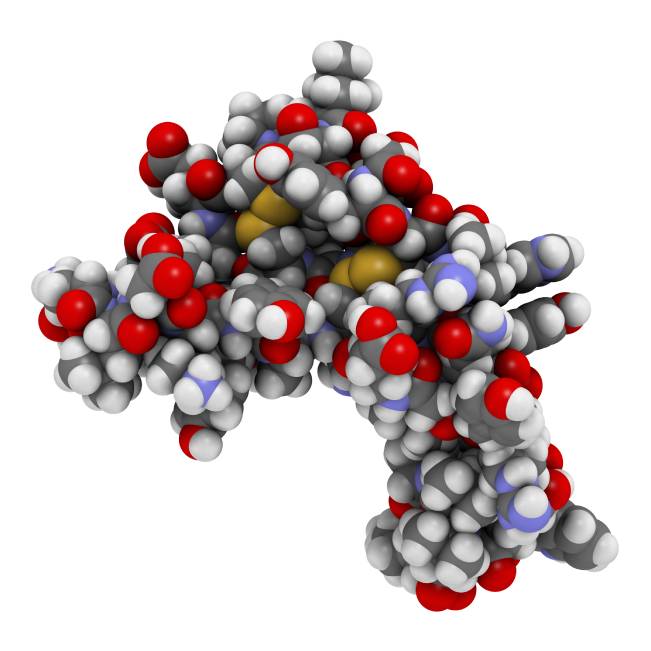
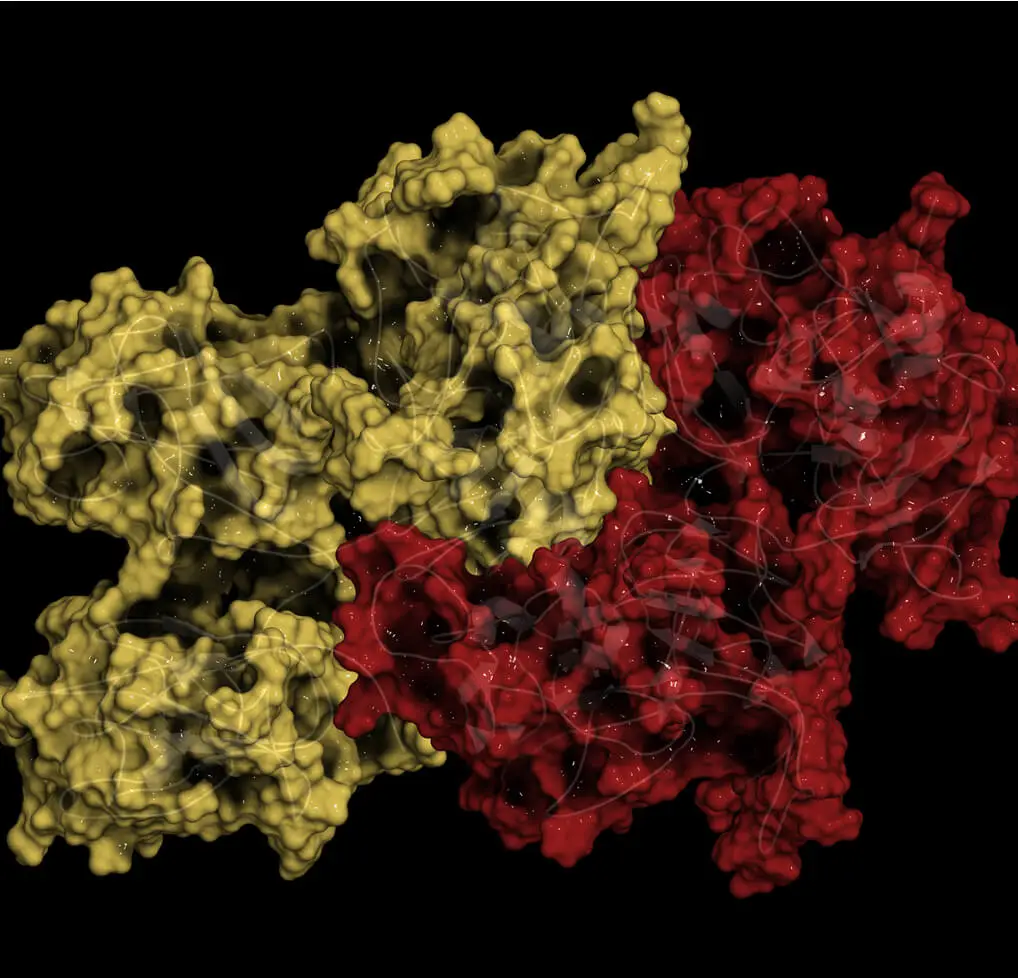
The hormone is a heterodimeric glycoprotein that comprises of one alpha and one beta subunits that are non-covalently associated. The alpha subunit in humans contains 92 amino acids whereas the beta subunit varies in its composition, but generally is of 120 amino acids long.
What is the action of luteinizing hormone LH? The beta subunit is responsible for luteinizing hormones’ biological activity and interaction specificity with the LH receptor. The difference in these subunit compositions regulates the bioactivity and degradation speed of luteinizing hormone. The alpha subunit gene is on chromosome 6q12.21 while the gene for the beta subunit is on chromosome 19q13.32.
Luteinizing hormone (LH) is also known as lutrophin, lutropin, LHB, LH-B, LSH-beta, hLSB, LSH-B, and Lutropin subunit beta.
Sponsors Love Our Bioanalytical Laboratory Services For Top Quality And Industry Leading Turnaround
Connect With Us For A Reference Call With Them!

NorthEast BioLab is a responsive, collaborative, and reliable partner

We trust NorthEast BioLab to design and execute streamlined, impactful bioanalytical projects

We found their integrity as refreshing as readiness to provide creative scientific input and high-quality data

We have worked with NorthEast BioLab for over ten years given their commitment to highest quality bioanalytical data.

NorthEast BioLab tremendously supported us in reproducing our critical lab discoveries for drug metabolism

NorthEast BioLab always exceeds expectations on bioanalytical assay development, validation, and sample analysis.

“NorthEast BioLab goes the extra mile. We look forward to more meaningful collaborations.”

NorthEast BioLab offers a science-based, hands-on approach to the latest bioanalytical platforms

We are thrilled to complete our bioanalytical studies with their top quality and incredibly responsive team.

We worked closely to implement the most efficient and cost-effective bioanalytical assay for our PK Studies.

Our projects with NorthEast BioLab include successful method development, validation, stability studies during Clinical Phase I – IV studies.

NorthEast BioLab provides critical insight, and are compliant with regulatory standards and industry best practices. We highly recommend them and look forward to working together again.

Our latest successful study was a pivotal bioequivalence study, where samples from a cross-over study with about 100 volunteers needed swift analysis.

This study, same as all other bioanalytical studies, was completed with top quality and reporting standard with incredible responsiveness.

NorthEast BioLab’s scientists deliver high-quality data on time and within budget
Tackle Your LH Biomarker Assay Testing With Our Veteran Team Now!
How do we perform LH lab test?
Protocols we follow to perform LH tests
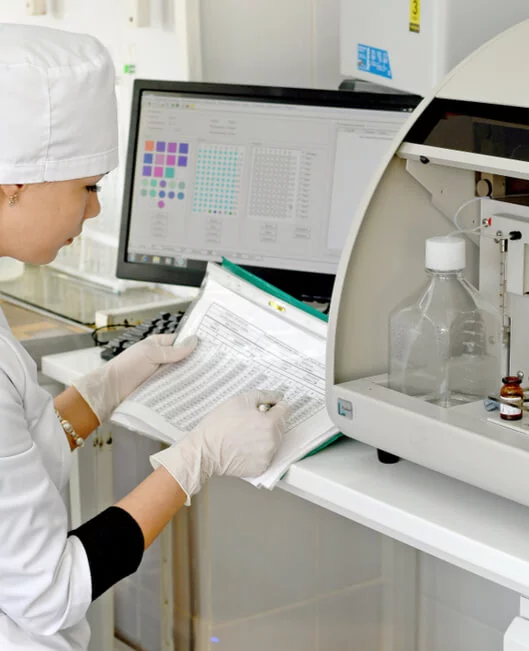
We, at NorthEast BioLabs, perform the luteinizing hormone test to detect LH in your samples. We use MSD, ELISA, and Luminex assays that are highly precise in LH detection. Researchers use these assays to understand the functions of luteinizing hormone. Following is a typical ELISA protocol explained.
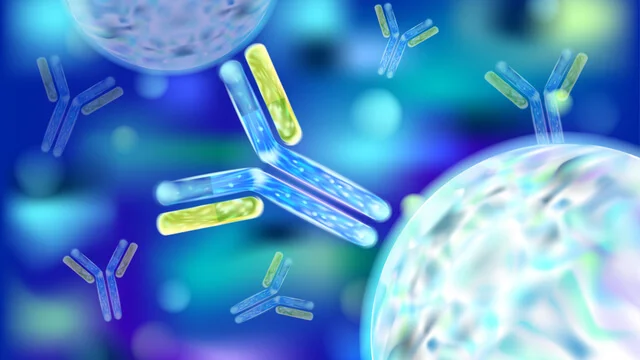
We begin the luteinizing hormone test with a pre-coated monoclonal antibody microtiter plate and add 50 μl of samples or standard in appropriate wells. The antibody is specific to LH. Therefore, if LH is present in the samples, it will bind to the pre-coated antibody. To quantify LH concentrations, we introduce an HRP-conjugated antibody in each well. This antibody achieves the sandwich effect in the reaction. Post-incubation, we add TMB substrate solution and allow it to react with the HRP enzyme. Wells containing enzyme-conjugated antibody and LH will show color change with the intensity of the color varying the hormonal concentration in the sample. We then add sulphuric acid to end the reaction and spectrophotometrically measure the color change at 450 nm.
We compare the optical density of the luteinizing hormone/ LH samples with the standard curve and determine the LH concentrations. The LH hormone assay is highly sensitive and can detect a minimum LH concentration of 3 mlU/ml.
Registered And Inspected By Various Regulatory Agencies






Don’t Wait, Start Your LH Biomarker Assay Testing Today!
Where could I learn more about LH Assay?
Popular LH resources for you to explore
Both high and low levels of luteinizing hormones can cause infertility in males and females. In women, research has correlated high LH levels with polycystic ovary syndrome. Low levels of LH reduce the production of eggs and sperms and thus affects reproductive efficacy. Several medications are available for LH dysregulation. Researchers have developed menotropin, a mixed form of LH and FSH, and lutropin alfa, a recombinant LH, to stimulate the development of the follicles and use them in infertility therapy.
To learn more about LH functions, explore the resources below.
https://medlineplus.gov/lab-tests/luteinizing-hormone-lh-levels-test/
https://www.webmd.com/a-to-z-guides/luteinizing-hormone-test#1
https://www.hormone.org/your-health-and-hormones/glands-and-hormones-a-to-z/hormones/luteinizing-hormone
https://www.healthline.com/health/lh-blood-test
https://www.yourhormones.info/hormones/luteinising-hormone/
Multiplex Cytokine Analysis, MSD Cytokine Assay
Understand Multiplex Cytokine Analysis, Meso Scale Discovery (MSD) Cytokine Assay For Inflammation, Chemokines, Interleukins, Growth Factor …


What are LH Functions and Effects?
Understanding the functions and effects of LH
The hypothalamic-pituitary-gonadal axis is a finely tuned system that regulates luteinizing hormone secretion from the gonadotropic cells. The hypothalamus secretes a gonadotrophin-releasing hormone that binds to the receptors of the anterior pituitary gland and triggers the synthesis and release of luteinizing hormone. The secreted luteinizing hormone reaches the ovaries and testes and binds to the receptors to stimulate hormone secretion and egg or sperm production. This hormonal release also suppresses gonadotrophin-releasing hormone secretion, which in turn suppresses the release of luteinizing hormone thus regulating its release through a feedback loop. When the hormonal levels fall, gonadotrophin-releasing hormone and luteinizing hormone level rise. This phenomenon is called negative feedback. In women, progesterone and estrogen exert this negative feedback, and testosterone does the same in men.
Luteinizing hormone function plays a crucial role in regulating sexual functioning and development and also regulates the menstrual cycle in women. It triggers egg release from the ovary, also called ovulation. Just before ovulation, the LH hormone levels surge quickly in women and therefore several luteinizing hormone tests use this concept to predict the rise of LH in women, thus aiding in determining the time of ovulation.
Trust Our LH Biomarker Assay Testing.
Explore More Biomarkers
-
Brain-Derived Neurotrophic Factor
-
 Granulate Colony Stimulation Factor
-
 Epidermal growth factor
-
 Fas Ligand
-
 Granulocyte Macrophage Colony Stimulating Factor
-
 Leukemia Inhibitory Factor
-
 Luteinizing hormone
-
 Macrophage Migration Inhibitory Factor
-
 Interferon Beta
-
 Interferon Gamma
-
 Transforming Growth Factor Beta 1
-
 B Type Natriuretic Peptide
-
 Glial Fibrillary Acidic Protein
-
 Cystatin C
-
 Hepatocyte Growth Factor
-
 Interferon Alpha 2
-
 Tumor Necrosis Factor Alpha